INVALID state
Dear all
Could someone help me to identify the difference between the following 3 rules.
1. iptables -t mangle -A PREROUTING -p tcp ! --syn -m state --state INVALID -j DROP
2. iptables -A INPUT -p tcp ! --syn -m state --state INVALID -j DROP
3. iptables -A INPUP -p tcp ! --syn -m conntrack --cstate INVALID -j DROP
Many thanks
Quoted 9 lines · On 28.02.2010 10:31, [email protected] wrote:
Dear all
Could someone help me to identify the difference between the following 3 rules.
1. iptables -t mangle -A PREROUTING -p tcp ! --syn -m state --state INVALID -j DROP
2. iptables -A INPUT -p tcp ! --syn -m state --state INVALID -j DROP
3. iptables -A INPUP -p tcp ! --syn -m conntrack --cstate INVALID -j DROP
take a look at this picture, to see, that mangle/PREROUTING may catch different things than filter/INPUT:
http://jengelh.medozas.de/images/nf-packet-flow.png
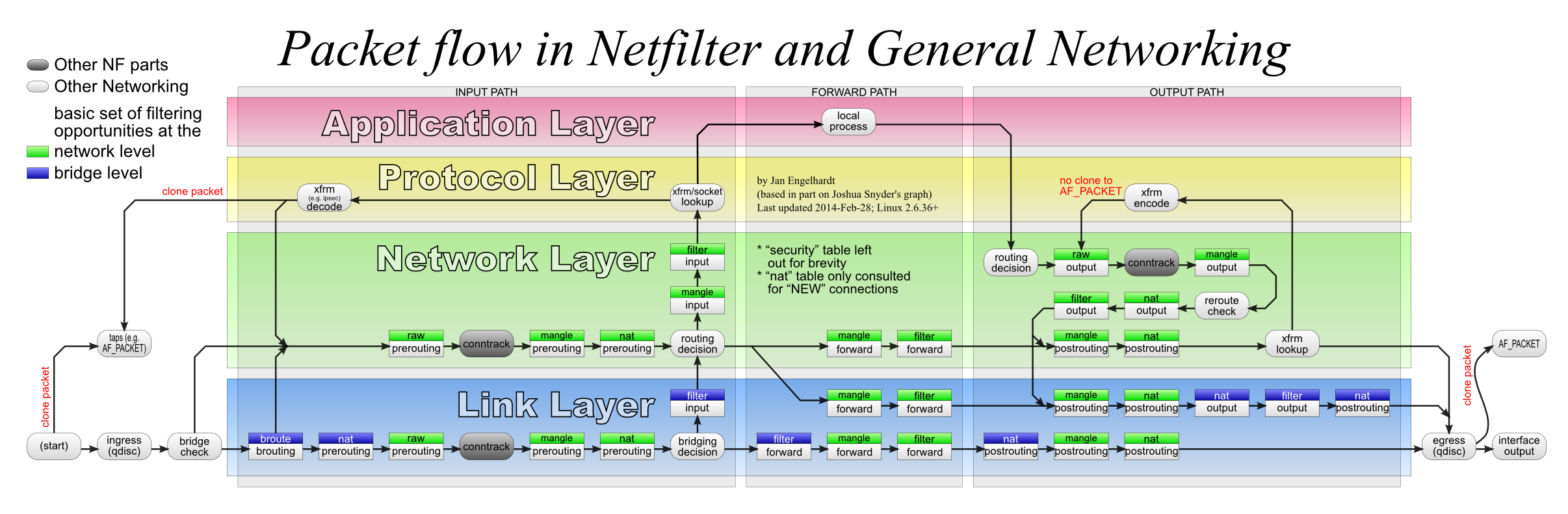
Generally filtering (ACCEPT/DROP/REJECT) should be done in the filter table, unless there is a good reason (and understanding) to do it otherwise (i.e. the nat table does not allow DROP).
The mangle table is generally meant for packet manipulation. i.e. marking, changing ip settings, etc...
conntrack supports all states that the state match does, plus some more.
More in general:
imho the '! --syn' is quite unnecessary, correct me if I'm wrong.
Best regards
Mart
Thanks for the help.
Assuming that the a packet reach the 1,2,3 rules is there a difference regards matching between "-m state --state INVALID" applied in 1 and 2 rules or the "-m conntrack --cstate INVALID" statements?
I am not sure about ! --syn, I read it in the chaostables doc
http://jengelh.medozas.de/documents/Chaostables.pdf
Best wishes,
Denes
What I do not really understand is that is there a difference between the behavior of the
Quoted 38 lines · Mart Frauenlob
Quoted 10 lines · On 28.02.2010 10:31, [email protected] wrote:
Dear all
Could someone help me to identify the difference between the following 3 rules.
1. iptables -t mangle -A PREROUTING -p tcp ! --syn -m state --state INVALID -j DROP
2. iptables -A INPUT -p tcp ! --syn -m state --state INVALID -j DROP
3. iptables -A INPUP -p tcp ! --syn -m conntrack --cstate INVALID -j DROPtake a look at this picture, to see, that mangle/PREROUTING may catch different things than filter/INPUT:
http://jengelh.medozas.de/images/nf-packet-flow.pngGenerally filtering (ACCEPT/DROP/REJECT) should be done in the filter table, unless there is a good reason (and understanding) to do it otherwise (i.e. the nat table does not allow DROP).
The mangle table is generally meant for packet manipulation. i.e. marking, changing ip settings, etc...conntrack supports all states that the state match does, plus some more.
More in general:
imho the '! --syn' is quite unnecessary, correct me if I'm wrong.Best regards
Mart
--
To unsubscribe from this list: send the line "unsubscribe netfilter" in the body of a message to [email protected]
More majordomo info at http://vger.kernel.org/majordomo-info.html
Quoted 26 lines · On 28.02.2010 11:52, [email protected] wrote:
Quoted 25 lines · Mart Frauenlob
Quoted 11 lines · On 28.02.2010 10:31, [email protected] wrote:
Dear all
Could someone help me to identify the difference between the following 3 rules.
1. iptables -t mangle -A PREROUTING -p tcp ! --syn -m state --state INVALID -j DROP
2. iptables -A INPUT -p tcp ! --syn -m state --state INVALID -j DROP
3. iptables -A INPUP -p tcp ! --syn -m conntrack --cstate INVALID -j DROPtake a look at this picture, to see, that mangle/PREROUTING may catch different things than filter/INPUT:
http://jengelh.medozas.de/images/nf-packet-flow.pngGenerally filtering (ACCEPT/DROP/REJECT) should be done in the filter table, unless there is a good reason (and understanding) to do it otherwise (i.e. the nat table does not allow DROP).
The mangle table is generally meant for packet manipulation. i.e. marking, changing ip settings, etc...
Quoted 9 lines
Quoted 6 lines
conntrack supports all states that the state match does, plus some more.
More in general:
imho the '! --syn' is quite unnecessary, correct me if I'm wrong.Thanks for the help.
np, but please switch to bottom posting...
Quoted 5 lines
Assuming that the a packet reach the 1,2,3 rules is there a difference regards matching between "-m state --state INVALID" applied in 1 and 2 rules or the "-m conntrack --cstate INVALID" statements?
requoting myself:
Quoted 1 line
conntrack supports all states that the state match does, plus some more
so, no difference.