clk: atlas7: a bind of fixes
cover clk: atlas7: a bind of fixes
Guo Zeng (5):
clk: atlas7: add lost pwm unit clks
clk: atlas7: export mux clks so that driver can use it
clk: atlas7: fix the clock tree for bluetooth stuff
clk: sirf: fix bit field and its root clk for coresight_tpiu
clk: atlas7: fix pll missed divide NR in fraction mode
Yibo Cai (2):
clk: sirf: fix integer overflow in dto rate calculation
clk: atlas7: replace dto resolution magic number by macro
 drivers/clk/sirf/clk-atlas7.c | 33 +++++++++++++++++++++------------
 1 file changed, 21 insertions(+), 12 deletions(-)
Signature · 1 line
1.9.1
PATCH 1/7 clk: atlas7: add lost pwm unit clks
From: Guo Zeng <[email protected]>
---
 drivers/clk/sirf/clk-atlas7.c | 4 ++++
 1 file changed, 4 insertions(+)
drivers/clk/sirf/clk-atlas7.c +4 -0
@@ -1174,6 +1174,10 @@ static struct atlas7_unit_init_data unit_list[] __initdata = { { 135, "thbtm_io", "btm_io", 0, SIRFSOC_CLKC_LEAF_CLK_EN8_SET, 7, &leaf8_gate_lock }, { 136, "btslow", "xinw_fixdiv_btslow", 0, SIRFSOC_CLKC_ROOT_CLK_EN1_SET, 25, &root1_gate_lock }, { 137, "a7ca_btslow", "btslow", 0, SIRFSOC_CLKC_LEAF_CLK_EN8_SET, 0, &leaf8_gate_lock }, + { 138 , "pwm_io", "io_mux", 0, SIRFSOC_CLKC_LEAF_CLK_EN0_SET, 0, &leaf0_gate_lock }, + { 139 , "pwm_xin", "xin", 0, SIRFSOC_CLKC_LEAF_CLK_EN0_SET, 1, &leaf0_gate_lock }, + { 140 , "pwm_xinw", "xinw", 0, SIRFSOC_CLKC_LEAF_CLK_EN0_SET, 2, &leaf0_gate_lock }, + { 141 , "thcgum_sys", "sys_mux", 0, SIRFSOC_CLKC_LEAF_CLK_EN0_SET, 3, &leaf0_gate_lock }, };static struct clk *atlas7_clks[ARRAY_SIZE (unit_list)];
Signature · 1 line
1.9.1
PATCH 2/7 clk: atlas7: export mux clks so that driver can use it
In reply to Barry SongFrom: Guo Zeng <[email protected]>
this patch makes mux clks can be referenced by device drivers.
---
 drivers/clk/sirf/clk-atlas7.c | 5 +++--
 1 file changed, 3 insertions(+), 2 deletions(-)
drivers/clk/sirf/clk-atlas7.c +3 -2
@@ -1180,7 +1180,7 @@ static struct atlas7_unit_init_data unit_list[] __initdata = { { 141 , "thcgum_sys", "sys_mux", 0, SIRFSOC_CLKC_LEAF_CLK_EN0_SET, 3, &leaf0_gate_lock }, }; -static struct clk *atlas7_clks[ARRAY_SIZE (unit_list)]; +static struct clk *atlas7_clks[ARRAY_SIZE (unit_list) +ARRAY_SIZE (mux_list)];static int unit_clk_is_enabled (struct clk_hw *hw) {
@@ -1613,6 +1613,7 @@ static void __init atlas7_clk_init(struct device_node *np) sirfsoc_clk_vbase + mux->mux_offset, mux->shift, mux->width, mux->mux_flags, NULL); + atlas7_clks[ARRAY_SIZE (unit_list) + i] = clk;BUG_ON (!clk); }
@@ -1624,7 +1625,7 @@ static void __init atlas7_clk_init(struct device_node *np) } clk_data.clks = atlas7_clks; - clk_data.clk_num =ARRAY_SIZE (unit_list); + clk_data.clk_num =ARRAY_SIZE (unit_list) +ARRAY_SIZE (mux_list); ret =of_clk_add_provider (np, of_clk_src_onecell_get, &clk_data);BUG_ON (ret);
Signature · 1 line
1.9.1
PATCH 2/7 clk: atlas7: export mux clks so that driver can use it
Quoted 7 lines · Barry Song
From: Guo Zeng <[email protected]>
this patch makes mux clks can be referenced by device drivers.
Signed-off-by Guo Zeng <[email protected]>Signed-off-by Barry Song <[email protected]>---
The subject makes this sounds like we're exporting clocks to drivers via extern, but that's not happening. Perhaps the subject could be clarified to say something like "export mux clks so that consumers can get them"?
Signature · 2 lines
Qualcomm Innovation Center, Inc. is a member of Code Aurora Forum,
a Linux Foundation Collaborative Project
PATCH 2/7 clk: atlas7: export mux clks so that driver can use it
2015-07-29 5:56 GMT+08:00 Stephen Boyd <[email protected]>:
Quoted 5 lines · Barry Song
Quoted 4 lines
From: Guo Zeng <[email protected]>
this patch makes mux clks can be referenced by device drivers.
Quoted 8 lines
Quoted 3 lines
Signed-off-by Guo Zeng <[email protected]>Signed-off-by Barry Song <[email protected]>---
The subject makes this sounds like we're exporting clocks to drivers via extern, but that's not happening. Perhaps the subject could be clarified to say something like "export mux clks so that consumers can get them"?
ok. sounds good.
-barry
PATCH 3/7 clk: sirf: fix integer overflow in dto rate calculation
In reply to Barry SongFrom: Yibo Cai <[email protected]>
I cannot believe that I spend quite a lot time in finding this bug. It seems a pitfall people tend to fall in.
In "int64 = int32 * int32", conversion from 32-bits to 64-bits comes after the multiplication. So this statement may not work as expected.
---
 drivers/clk/sirf/clk-atlas7.c | 4 ++--
 1 file changed, 2 insertions(+), 2 deletions(-)
drivers/clk/sirf/clk-atlas7.c +2 -2
@@ -519,7 +519,7 @@ static unsigned long dto_clk_recalc_rate(struct clk_hw *hw,static long dto_clk_round_rate (struct clk_hw *hw,unsigned long rate,unsigned long *parent_rate) { -u64 dividend = rate * (1 <<29 ); +u64 dividend = (u64 )rate * (1 <<29 );do_div (dividend, *parent_rate); dividend *= *parent_rate;
@@ -531,7 +531,7 @@ static long dto_clk_round_rate(struct clk_hw *hw, unsigned long rate,static int dto_clk_set_rate (struct clk_hw *hw,unsigned long rate,unsigned long parent_rate) { -u64 dividend = rate * (1 <<29 ); +u64 dividend = (u64 )rate * (1 <<29 );struct clk_dto *clk =to_dtoclk (hw);do_div (dividend, parent_rate);
Signature · 1 line
1.9.1
PATCH 4/7 clk: atlas7: replace dto resolution magic number by macro
In reply to Barry SongFrom: Yibo Cai <[email protected]>
---
 drivers/clk/sirf/clk-atlas7.c | 13 ++++++++-----
 1 file changed, 8 insertions(+), 5 deletions(-)
drivers/clk/sirf/clk-atlas7.c +8 -5
@@ -465,6 +465,9 @@ static struct clk_pll clk_sys3pll = {* double resolution mode:fout = fin * finc / 2^29 * normal mode:fout = fin * finc / 2^28 */ +#define DTO_RESL_DOUBLE (1ULL << 29) +#define DTO_RESL_NORMAL (1ULL << 28) +static int dto_clk_is_enabled (struct clk_hw *hw) {struct clk_dto *clk =to_dtoclk (hw);
@@ -509,9 +512,9 @@ static unsigned long dto_clk_recalc_rate(struct clk_hw *hw, rate *= finc;if (droff &BIT (0 ))/* Double resolution off */ -do_div (rate,1 <<28 ); +do_div (rate,DTO_RESL_NORMAL );else -do_div (rate,1 <<29 ); +do_div (rate,DTO_RESL_DOUBLE );return rate; }
@@ -519,11 +522,11 @@ static unsigned long dto_clk_recalc_rate(struct clk_hw *hw,static long dto_clk_round_rate (struct clk_hw *hw,unsigned long rate,unsigned long *parent_rate) { -u64 dividend = (u64 )rate * (1 <<29 ); +u64 dividend = rate *DTO_RESL_DOUBLE ;do_div (dividend, *parent_rate); dividend *= *parent_rate; -do_div (dividend,1 <<29 ); +do_div (dividend,DTO_RESL_DOUBLE );return dividend; }
@@ -531,7 +534,7 @@ static long dto_clk_round_rate(struct clk_hw *hw, unsigned long rate,static int dto_clk_set_rate (struct clk_hw *hw,unsigned long rate,unsigned long parent_rate) { -u64 dividend = (u64 )rate * (1 <<29 ); +u64 dividend = rate *DTO_RESL_DOUBLE ;struct clk_dto *clk =to_dtoclk (hw);do_div (dividend, parent_rate);
Signature · 1 line
1.9.1
PATCH 5/7 clk: atlas7: fix the clock tree for bluetooth stuff
In reply to Barry SongFrom: Guo Zeng <[email protected]>
normally dmac should depends on only one clock, to operate dmac internal register, but dmac4 is very special case, it normally dmac should depends on only one clock, to operate dmac internal register, but dmac4 is very special case, it depends on two additional clock, the reason is that dmac4 is wrapped in hw into bt a7ca module, and accessing dmac4 internal register would also require that the a7ca_io and related bt macro io clk also enabled.
here workaround this by setting depend clk into parent of dmac4, and also related clks, to reflect dependency. noc_io
    -btm_noc_clk
            -a7ca_io
                    -dmac4_io
                                    -uart6_io
-usp3_io--- drivers/clk/sirf/clk-atlas7.c | 8 ++++---- 1 file changed, 4 insertions(+), 4 deletions(-)
drivers/clk/sirf/clk-atlas7.c +4 -4
@@ -1169,10 +1169,10 @@ static struct atlas7_unit_init_data unit_list[] __initdata = { { 127, "vss_sdr", "gpum_sdr", 0, SIRFSOC_CLKC_LEAF_CLK_EN7_SET, 1, &leaf7_gate_lock }, { 128, "thgpum_nocr", "gpum_nocr", 0, SIRFSOC_CLKC_LEAF_CLK_EN7_SET, 2, &leaf7_gate_lock }, { 129, "a7ca_btss", "btm_btss", 0, SIRFSOC_CLKC_LEAF_CLK_EN8_SET, 1, &leaf8_gate_lock }, - { 130, "dmac4_io", "btm_io", 0, SIRFSOC_CLKC_LEAF_CLK_EN8_SET, 2, &leaf8_gate_lock }, - { 131, "uart6_io", "btm_io", 0, SIRFSOC_CLKC_LEAF_CLK_EN8_SET, 3, &leaf8_gate_lock }, - { 132, "usp3_io", "btm_io", 0, SIRFSOC_CLKC_LEAF_CLK_EN8_SET, 4, &leaf8_gate_lock }, - { 133, "a7ca_io", "btm_io", 0, SIRFSOC_CLKC_LEAF_CLK_EN8_SET, 5, &leaf8_gate_lock }, + { 130 , "dmac4_io", "a7ca_io", 0, SIRFSOC_CLKC_LEAF_CLK_EN8_SET, 2, &leaf8_gate_lock }, + { 131 , "uart6_io", "dmac4_io", 0, SIRFSOC_CLKC_LEAF_CLK_EN8_SET, 3, &leaf8_gate_lock }, + { 132 , "usp3_io", "dmac4_io", 0, SIRFSOC_CLKC_LEAF_CLK_EN8_SET, 4, &leaf8_gate_lock }, + { 133 , "a7ca_io", "noc_btm_io", 0, SIRFSOC_CLKC_LEAF_CLK_EN8_SET, 5, &leaf8_gate_lock }, { 134, "noc_btm_io", "btm_io", 0, SIRFSOC_CLKC_LEAF_CLK_EN8_SET, 6, &leaf8_gate_lock }, { 135, "thbtm_io", "btm_io", 0, SIRFSOC_CLKC_LEAF_CLK_EN8_SET, 7, &leaf8_gate_lock }, { 136, "btslow", "xinw_fixdiv_btslow", 0, SIRFSOC_CLKC_ROOT_CLK_EN1_SET, 25, &root1_gate_lock },
Signature · 1 line
1.9.1
PATCH 5/7 clk: atlas7: fix the clock tree for bluetooth stuff
Quoted 6 lines · Barry Song
From: Guo Zeng <[email protected]>
normally dmac should depends on only one clock, to operate dmac internal register, but dmac4 is very special case, it normally dmac should depends on only one clock, to operate dmac internal register, but dmac4 is very special case, it
The sentence is duplicated twice here
Quoted 6 lines
depends on two additional clock, the reason is that dmac4 is wrapped in hw into bt a7ca module, and accessing dmac4 internal register would also require that the
a7ca_ioand related bt macro io clk also enabled.
here workaround this by setting depend clk into parent of dmac4, and also related clks, to reflect dependency.
We don't put clocks as parents of other clocks just because the child depends on the parent to be accessed. It isn't very clear from the description, but it sounds like a7ca_io is just another clock that the bluetooth driver needs to control? We want to express the true clk hierarchy, not some psuedo dependency tree.
Quoted 32 lines
noc_io-btm_noc_clk -a7ca_io -dmac4_io -uart6_io -usp3_ioSigned-off-by Guo Zeng <[email protected]>Signed-off-by Barry Song <[email protected]>--- drivers/clk/sirf/clk-atlas7.c | 8 ++++---- 1 file changed, 4 insertions(+), 4 deletions(-)drivers/clk/sirf/clk-atlas7.c +4
-4@@ -1169,10 +1169,10 @@ static struct atlas7_unit_init_data unit_list[] __initdata = { { 127, "vss_sdr", "gpum_sdr", 0, SIRFSOC_CLKC_LEAF_CLK_EN7_SET, 1, &leaf7_gate_lock }, { 128, "thgpum_nocr", "gpum_nocr", 0, SIRFSOC_CLKC_LEAF_CLK_EN7_SET, 2, &leaf7_gate_lock }, { 129, "a7ca_btss", "btm_btss", 0, SIRFSOC_CLKC_LEAF_CLK_EN8_SET, 1, &leaf8_gate_lock }, - { 130, "dmac4_io", "btm_io", 0, SIRFSOC_CLKC_LEAF_CLK_EN8_SET, 2, &leaf8_gate_lock }, - { 131, "uart6_io", "btm_io", 0, SIRFSOC_CLKC_LEAF_CLK_EN8_SET, 3, &leaf8_gate_lock }, - { 132, "usp3_io", "btm_io", 0, SIRFSOC_CLKC_LEAF_CLK_EN8_SET, 4, &leaf8_gate_lock }, - { 133, "a7ca_io", "btm_io", 0, SIRFSOC_CLKC_LEAF_CLK_EN8_SET, 5, &leaf8_gate_lock }, + { 130 , "dmac4_io", "a7ca_io", 0, SIRFSOC_CLKC_LEAF_CLK_EN8_SET, 2, &leaf8_gate_lock }, + { 131 , "uart6_io", "dmac4_io", 0, SIRFSOC_CLKC_LEAF_CLK_EN8_SET, 3, &leaf8_gate_lock }, + { 132 , "usp3_io", "dmac4_io", 0, SIRFSOC_CLKC_LEAF_CLK_EN8_SET, 4, &leaf8_gate_lock }, + { 133 , "a7ca_io", "noc_btm_io", 0, SIRFSOC_CLKC_LEAF_CLK_EN8_SET, 5, &leaf8_gate_lock }, { 134, "noc_btm_io", "btm_io", 0, SIRFSOC_CLKC_LEAF_CLK_EN8_SET, 6, &leaf8_gate_lock }, { 135, "thbtm_io", "btm_io", 0, SIRFSOC_CLKC_LEAF_CLK_EN8_SET, 7, &leaf8_gate_lock }, { 136, "btslow", "xinw_fixdiv_btslow", 0, SIRFSOC_CLKC_ROOT_CLK_EN1_SET, 25, &root1_gate_lock },
Signature · 2 lines
Qualcomm Innovation Center, Inc. is a member of Code Aurora Forum,
a Linux Foundation Collaborative Project
PATCH 5/7 clk: atlas7: fix the clock tree for bluetooth stuff
2015-07-29 6:07 GMT+08:00 Stephen Boyd <[email protected]>:
Quoted 17 lines · Barry Song
Quoted 6 lines
From: Guo Zeng <[email protected]>
normally dmac should depends on only one clock, to operate dmac internal register, but dmac4 is very special case, it normally dmac should depends on only one clock, to operate dmac internal register, but dmac4 is very special case, it
The sentence is duplicated twice here
Quoted 6 lines
depends on two additional clock, the reason is that dmac4 is wrapped in hw into bt a7ca module, and accessing dmac4 internal register would also require that the
a7ca_ioand related bt macro io clk also enabled.
here workaround this by setting depend clk into parent of dmac4, and also related clks, to reflect dependency.
Quoted 6 lines
We don't put clocks as parents of other clocks just because the child depends on the parent to be accessed. It isn't very clear from the description, but it sounds like
a7ca_iois just another clock that the bluetooth driver needs to control? We want to express the true clk hierarchy, not some psuedo dependency tree.
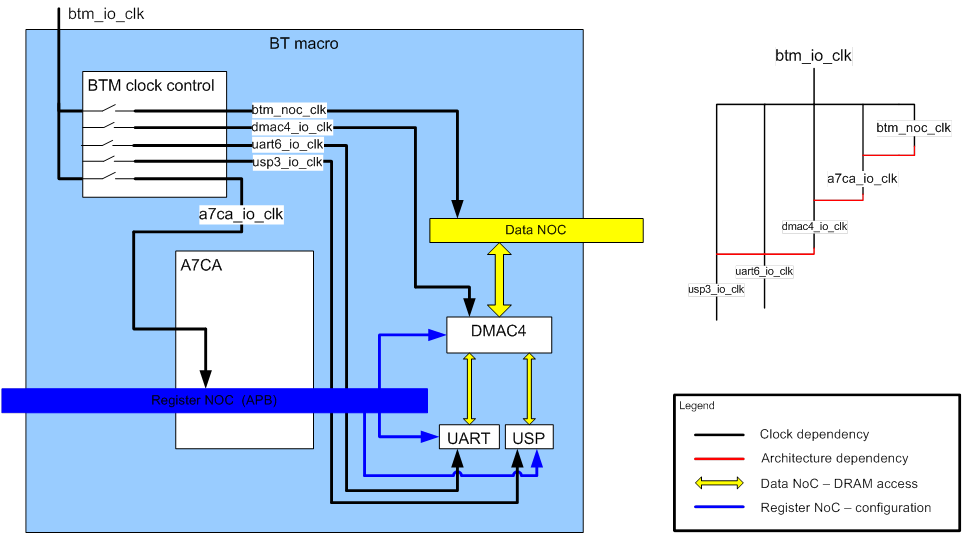
Stephen, generically i agree the codes should be a map of real hardware connection. here the problem is real hardware connection is very much difficult for its drivers implementation and these clocks are buggy designed in HW. they are not a tree, they are a "network".
see attached diagram(hope LKML will not reject the attachment), we are not a tree, that means btm_noc_clk depends on btm_io_clk, a7ca_io_clk depends on btm_io_clk, dmac4_io_clk depends on btm_noc_clk, a7ca_io_clk and btm_noc_clk....usp3_io_clk depends on uart6_io_clk, dmac4_io_clk, btm_noc_clk, a7ca_io_clk and btm_noc_clk.
so in the driver, we have a choice as below:
in uart6 driver, we take all of the clocks.
in dmac4 driver, we take all of btm_noc_clk, a7ca_io_clk and btm_noc_clk.
...
what a ugly code! that is what we did before.
so here, we moved to do a not-real clock tree, that means we makes
1.btm_io_clk the parent of btm_noc_clk
2. btm_noc_clk the parent of a7ca_io_clk
3. a7ca_io_clk the parent of dmac4_io_clk
...
but it doesn't break any dependency of these clocks, and make all clients driver as clean as a simple tree.
i strongly think we should keep this "workaround", otherwise, we have many pain in all of the related drivers.
Quoted 24 lines
Quoted 24 lines
noc_io-btm_noc_clk -a7ca_io -dmac4_io -uart6_io -usp3_ioSigned-off-by Guo Zeng <[email protected]>Signed-off-by Barry Song <[email protected]>--- drivers/clk/sirf/clk-atlas7.c | 8 ++++---- 1 file changed, 4 insertions(+), 4 deletions(-)drivers/clk/sirf/clk-atlas7.c +0
-3@@ -1169,10 +1169,10 @@ static struct atlas7_unit_init_data unit_list[] __initdata = { { 127, "vss_sdr", "gpum_sdr", 0, SIRFSOC_CLKC_LEAF_CLK_EN7_SET, 1, &leaf7_gate_lock }, { 128, "thgpum_nocr", "gpum_nocr", 0, SIRFSOC_CLKC_LEAF_CLK_EN7_SET, 2, &leaf7_gate_lock }, { 129, "a7ca_btss", "btm_btss", 0, SIRFSOC_CLKC_LEAF_CLK_EN8_SET, 1, &leaf8_gate_lock }, - { 130, "dmac4_io", "btm_io", 0, SIRFSOC_CLKC_LEAF_CLK_EN8_SET, 2, &leaf8_gate_lock }, - { 131, "uart6_io", "btm_io", 0, SIRFSOC_CLKC_LEAF_CLK_EN8_SET, 3, &leaf8_gate_lock }, - { 132, "usp3_io", "btm_io", 0, SIRFSOC_CLKC_LEAF_CLK_EN8_SET, 4, &leaf8_gate_lock },
Quoted 9 lines
drivers/clk/sirf/clk-atlas7.c static struct atlas7_unit_init_data unit_list[] __initdata = { · line 1178
Quoted 8 lines
drivers/clk/sirf/clk-atlas7.c +4
-1- { 133, "a7ca_io", "btm_io", 0, SIRFSOC_CLKC_LEAF_CLK_EN8_SET, 5, &leaf8_gate_lock }, + { 130 , "dmac4_io", "a7ca_io", 0, SIRFSOC_CLKC_LEAF_CLK_EN8_SET, 2, &leaf8_gate_lock }, + { 131 , "uart6_io", "dmac4_io", 0, SIRFSOC_CLKC_LEAF_CLK_EN8_SET, 3, &leaf8_gate_lock }, + { 132 , "usp3_io", "dmac4_io", 0, SIRFSOC_CLKC_LEAF_CLK_EN8_SET, 4, &leaf8_gate_lock }, + { 133 , "a7ca_io", "noc_btm_io", 0, SIRFSOC_CLKC_LEAF_CLK_EN8_SET, 5, &leaf8_gate_lock }, { 134, "noc_btm_io", "btm_io", 0, SIRFSOC_CLKC_LEAF_CLK_EN8_SET, 6, &leaf8_gate_lock }, { 135, "thbtm_io", "btm_io", 0, SIRFSOC_CLKC_LEAF_CLK_EN8_SET, 7, &leaf8_gate_lock }, { 136, "btslow", "xinw_fixdiv_btslow", 0, SIRFSOC_CLKC_ROOT_CLK_EN1_SET, 25, &root1_gate_lock },
-barry
-------------- next part --------------
A non-text attachment was scrubbed...
Name: image001.png
Type: image/png
Size: 27774 bytes
Desc: not available
URL: <http://lists.infradead.org/pipermail/linux-arm-kernel/attachments/20150729/73e9f8b5/attachment-0001.png>
PATCH 5/7 clk: atlas7: fix the clock tree for bluetooth stuff
Quoted 47 lines · Barry Song
2015-07-29 6:07 GMT+08:00 Stephen Boyd <[email protected]>:
Quoted 15 lines · Barry Song
Quoted 6 lines
From: Guo Zeng <[email protected]>
normally dmac should depends on only one clock, to operate dmac internal register, but dmac4 is very special case, it normally dmac should depends on only one clock, to operate dmac internal register, but dmac4 is very special case, it
The sentence is duplicated twice here
Quoted 6 lines
depends on two additional clock, the reason is that dmac4 is wrapped in hw into bt a7ca module, and accessing dmac4 internal register would also require that the
a7ca_ioand related bt macro io clk also enabled.
here workaround this by setting depend clk into parent of dmac4, and also related clks, to reflect dependency.Quoted 6 lines
We don't put clocks as parents of other clocks just because the child depends on the parent to be accessed. It isn't very clear from the description, but it sounds like
a7ca_iois just another clock that the bluetooth driver needs to control? We want to express the true clk hierarchy, not some psuedo dependency tree.Stephen, generically i agree the codes should be a map of real hardware connection. here the problem is real hardware connection is very much difficult for its drivers implementation and these clocks are buggy designed in HW. they are not a tree, they are a "network".
see attached diagram(hope LKML will not reject the attachment), we are not a tree, that means
btm_noc_clkdepends onbtm_io_clk,a7ca_io_clkdepends onbtm_io_clk,dmac4_io_clkdepends onbtm_noc_clk,a7ca_io_clkandbtm_noc_clk....usp3_io_clkdepends onuart6_io_clk,dmac4_io_clk,btm_noc_clk,a7ca_io_clkandbtm_noc_clk.so in the driver, we have a choice as below:
in uart6 driver, we take all of the clocks.
in dmac4 driver, we take all ofbtm_noc_clk,a7ca_io_clkandbtm_noc_clk.
...
what a ugly code! that is what we did before.so here, we moved to do a not-real clock tree, that means we makes
1.btm_io_clk the parent ofbtm_noc_clk
2.btm_noc_clkthe parent ofa7ca_io_clk
3.a7ca_io_clkthe parent ofdmac4_io_clk
...
Quoted 6 lines
but it doesn't break any dependency of these clocks, and make all clients driver as clean as a simple tree.
i strongly think we should keep this "workaround", otherwise, we have many pain in all of the related drivers.
Thanks for the nice PNG. It seems like you have a typical bus topology where UART and USP need to go through DMAC and the Data NOC to get out on the system bus. btm_io_clk is the true parent of all the clocks.
I can only guess that A7CA is some sort of device that you have to go through from the CPU side to access the UART, USP, and DMAC hardware blocks. Is that right? Can you please describe what each of these blocks do and if there are linux drivers for them?
One way to model this would be to make UART and USP children of the DMAC hardware block. And then make a driver/device up for the NOC and have the DMAC be a child of the NOC device. Then the NOC would probe and be runtime PM enabled to turn on the btm_noc_clk whenever it or its children are enabled. Then the DMAC device would do the same thing, but with the dmac4_io_clk, and the UART and USP devices would get the uart6_io_clk and usp3_io_clk respectively and enable/disable them when the device is active.
That leaves us with the a7ca_io_clk, which is really just the clock for a bus that register read/writes go through. In designs I've seen, I usually left that clock under the control of each individual device that sits on the bus. So in this case, the DMAC, USP and UART device drivers would all need to get the a7ca_io_clk as their "interface" clock and make sure to enable or disable it whenever the driver wants to read/write the registers. I'm not sure if something else is done on the APB for you, but that may be all that's necessary.
This actually points out a big problem we have right now in Linux, which is the lack of proper power management for the type of bus topology you see in embedded systems. Some of the genpd work going on may also be another solution to this problem, where we could group multiple devices into generic power domains that know to turn on 2 or 3 of the clocks. For example, the DMAC, USP, and UART device could all be in the APB power domain so that the a7ca_io_clk is enabled whenever one of those devices is active. And there could be another power domain for the NOC that encompasses all devices that are sitting on that NOC.
Long story short, solving these sorts of problems in the clk framework is typically the easy route that people take, although it's the wrong route. We're not expressing these sorts of complicated bus topologies in the clk framework. We're only expressing the clk tree (which is already quite complicated enough). Your drivers can still be simple, but don't make it more complicated than it has to be in the clk framework for that.
Signature · 2 lines
Qualcomm Innovation Center, Inc. is a member of Code Aurora Forum,
a Linux Foundation Collaborative Project
PATCH 5/7 clk: atlas7: fix the clock tree for bluetooth stuff
2015-08-06 9:44 GMT+08:00 Stephen Boyd <[email protected]>:
Quoted 53 lines · Barry Song
Quoted 52 lines
2015-07-29 6:07 GMT+08:00 Stephen Boyd <[email protected]>:
Quoted 19 lines · Barry Song
Quoted 7 lines
From: Guo Zeng <[email protected]>
normally dmac should depends on only one clock, to operate dmac internal register, but dmac4 is very special case, it normally dmac should depends on only one clock, to operate dmac internal register, but dmac4 is very special case, it
The sentence is duplicated twice here
Quoted 6 lines
depends on two additional clock, the reason is that dmac4 is wrapped in hw into bt a7ca module, and accessing dmac4 internal register would also require that the
a7ca_ioand related bt macro io clk also enabled.
here workaround this by setting depend clk into parent of dmac4, and also related clks, to reflect dependency.Quoted 6 lines
We don't put clocks as parents of other clocks just because the child depends on the parent to be accessed. It isn't very clear from the description, but it sounds like
a7ca_iois just another clock that the bluetooth driver needs to control? We want to express the true clk hierarchy, not some psuedo dependency tree.Stephen, generically i agree the codes should be a map of real hardware connection. here the problem is real hardware connection is very much difficult for its drivers implementation and these clocks are buggy designed in HW. they are not a tree, they are a "network".
see attached diagram(hope LKML will not reject the attachment), we are not a tree, that means
btm_noc_clkdepends onbtm_io_clk,a7ca_io_clkdepends onbtm_io_clk,dmac4_io_clkdepends onbtm_noc_clk,a7ca_io_clkandbtm_noc_clk....usp3_io_clkdepends onuart6_io_clk,dmac4_io_clk,btm_noc_clk,a7ca_io_clkandbtm_noc_clk.so in the driver, we have a choice as below:
in uart6 driver, we take all of the clocks.
in dmac4 driver, we take all ofbtm_noc_clk,a7ca_io_clkandbtm_noc_clk.
...
what a ugly code! that is what we did before.so here, we moved to do a not-real clock tree, that means we makes
1.btm_io_clk the parent ofbtm_noc_clk
2.btm_noc_clkthe parent ofa7ca_io_clk
3.a7ca_io_clkthe parent ofdmac4_io_clk
...
Quoted 8 lines
Quoted 6 lines
but it doesn't break any dependency of these clocks, and make all clients driver as clean as a simple tree.
i strongly think we should keep this "workaround", otherwise, we have many pain in all of the related drivers.Thanks for the nice PNG. It seems like you have a typical bus topology where
i feel very happy you can read this diagram carefully, then we can do some deeper discussion.
Quoted 2 lines
UART and USP need to go through DMAC and the Data NOC to get out on the system bus.
actually only uart6 and usp3 need to go through DMAC and the Data NOC to get out on the
system bus. so you know how painful it is to change uart and usp drivers to only put some
strange clocks for one node, but keep others nodes have normal clock tree?
the code might be as below:
https://git.kernel.org/cgit/linux/kernel/git/torvalds/linux.git/commit/?id=52bec4ed4ef83f1a14dbcfd1a97e35f77c6e261e
but after moving to this clock workaround we are talking about, we reverted the above patch:
https://git.kernel.org/cgit/linux/kernel/git/torvalds/linux.git/commit/?id=4b8038dca0c0ccf5e4689cc4fbbbf4f3728304be
we got a beautiful uart driver.
Quoted 1 line
btm_io_clkis the true parent of all the clocks
right, btm_io_clk is the true parent of all the clocks
Quoted 5 lines
I can only guess that A7CA is some sort of device that you have to go through from the CPU side to access the UART, USP, and DMAC hardware blocks. Is that right? Can you please describe what each of these blocks do and if there are linux drivers for them?
a7ca is bluetooth module embedded in the chip.
uart, usp(can be a general serial port), dmac have linux drivers in:
1. drivers/tty/serial/sirfsoc_uart.c
2. drivers/dma/sirf-dma.c
Quoted 28 lines
One way to model this would be to make UART and USP children of the DMAC hardware block. And then make a driver/device up for the NOC and have the DMAC be a child of the NOC device. Then the NOC would probe and be runtime PM enabled to turn on the
btm_noc_clkwhenever it or its children are enabled. Then the DMAC device would do the same thing, but with thedmac4_io_clk, and the UART and USP devices would get theuart6_io_clkandusp3_io_clkrespectively and enable/disable them when the device is active.That leaves us with the
a7ca_io_clk, which is really just the clock for a bus that register read/writes go through. In designs I've seen, I usually left that clock under the control of each individual device that sits on the bus. So in this case, the DMAC, USP and UART device drivers would all need to get thea7ca_io_clkas their "interface" clock and make sure to enable or disable it whenever the driver wants to read/write the registers. I'm not sure if something else is done on the APB for you, but that may be all that's necessary.This actually points out a big problem we have right now in Linux, which is the lack of proper power management for the type of bus topology you see in embedded systems. Some of the genpd work going on may also be another solution to this problem, where we could group multiple devices into generic power domains that know to turn on 2 or 3 of the clocks. For example, the DMAC, USP, and UART device could all be in the APB power domain so that the
a7ca_io_clkis enabled whenever one of those devices is active. And there could be another power domain for the NOC that encompasses all devices that are sitting on that NOC.
Quoted 7 lines
Long story short, solving these sorts of problems in the clk framework is typically the easy route that people take, although it's the wrong route. We're not expressing these sorts of complicated bus topologies in the clk framework. We're only expressing the clk tree (which is already quite complicated enough). Your drivers can still be simple, but don't make it more complicated than it has to be in the clk framework for that.
it does explain the current situation well. but how painful it is to express this kind of bus in any driver subsystem.
for exmaple, to access usp3, clocks in the whole topo should be open. but it seems the whole topo should not
be visible to the client driver like uart/dmac4.
if we stand in the position of dmac4, it only needs to know its clock should be enabled, why it needs to know
the complex topo in the complex bus?
so the below two are both wrong
1. take many clocks in the uart, dmac driver
2. ignore the topo and "simulate" one simple clk tree
if we have to choice one, i prefer it is 2.
-barry
PATCH 5/7 clk: atlas7: fix the clock tree for bluetooth stuff
In reply to Stephen Boyd2015-08-06 9:44 GMT+08:00 Stephen Boyd <[email protected]>:
Quoted 86 lines · Barry Song
Quoted 52 lines
2015-07-29 6:07 GMT+08:00 Stephen Boyd <[email protected]>:
Quoted 19 lines · Barry Song
Quoted 7 lines
From: Guo Zeng <[email protected]>
normally dmac should depends on only one clock, to operate dmac internal register, but dmac4 is very special case, it normally dmac should depends on only one clock, to operate dmac internal register, but dmac4 is very special case, it
The sentence is duplicated twice here
Quoted 6 lines
depends on two additional clock, the reason is that dmac4 is wrapped in hw into bt a7ca module, and accessing dmac4 internal register would also require that the
a7ca_ioand related bt macro io clk also enabled.
here workaround this by setting depend clk into parent of dmac4, and also related clks, to reflect dependency.Quoted 6 lines
We don't put clocks as parents of other clocks just because the child depends on the parent to be accessed. It isn't very clear from the description, but it sounds like
a7ca_iois just another clock that the bluetooth driver needs to control? We want to express the true clk hierarchy, not some psuedo dependency tree.Stephen, generically i agree the codes should be a map of real hardware connection. here the problem is real hardware connection is very much difficult for its drivers implementation and these clocks are buggy designed in HW. they are not a tree, they are a "network".
see attached diagram(hope LKML will not reject the attachment), we are not a tree, that means
btm_noc_clkdepends onbtm_io_clk,a7ca_io_clkdepends onbtm_io_clk,dmac4_io_clkdepends onbtm_noc_clk,a7ca_io_clkandbtm_noc_clk....usp3_io_clkdepends onuart6_io_clk,dmac4_io_clk,btm_noc_clk,a7ca_io_clkandbtm_noc_clk.so in the driver, we have a choice as below:
in uart6 driver, we take all of the clocks.
in dmac4 driver, we take all ofbtm_noc_clk,a7ca_io_clkandbtm_noc_clk.
...
what a ugly code! that is what we did before.so here, we moved to do a not-real clock tree, that means we makes
1.btm_io_clk the parent ofbtm_noc_clk
2.btm_noc_clkthe parent ofa7ca_io_clk
3.a7ca_io_clkthe parent ofdmac4_io_clk
...Quoted 6 lines
but it doesn't break any dependency of these clocks, and make all clients driver as clean as a simple tree.
i strongly think we should keep this "workaround", otherwise, we have many pain in all of the related drivers.Thanks for the nice PNG. It seems like you have a typical bus topology where UART and USP need to go through DMAC and the Data NOC to get out on the system bus.
btm_io_clkis the true parent of all the clocks.I can only guess that A7CA is some sort of device that you have to go through from the CPU side to access the UART, USP, and DMAC hardware blocks. Is that right? Can you please describe what each of these blocks do and if there are linux drivers for them?
One way to model this would be to make UART and USP children of the DMAC hardware block. And then make a driver/device up for the NOC and have the DMAC be a child of the NOC device. Then the NOC would probe and be runtime PM enabled to turn on the
btm_noc_clkwhenever it or its children are enabled. Then the DMAC device would do the same thing, but with thedmac4_io_clk, and the UART and USP devices would get theuart6_io_clkandusp3_io_clkrespectively and enable/disable them when the device is active.That leaves us with the
a7ca_io_clk, which is really just the clock for a bus that register read/writes go through. In designs I've seen, I usually left that clock under the control of each individual device that sits on the bus. So in this case, the DMAC, USP and UART device drivers would all need to get thea7ca_io_clkas their "interface" clock and make sure to enable or disable it whenever the driver wants to read/write the registers. I'm not sure if something else is done on the APB for you, but that may be all that's necessary.
Quoted 10 lines
This actually points out a big problem we have right now in Linux, which is the lack of proper power management for the type of bus topology you see in embedded systems. Some of the genpd work going on may also be another solution to this problem, where we could group multiple devices into generic power domains that know to turn on 2 or 3 of the clocks. For example, the DMAC, USP, and UART device could all be in the APB power domain so that the
a7ca_io_clkis enabled whenever one of those devices is active. And there could be another power domain for the NOC that encompasses all devices that are sitting on that NOC.
Stephen, this should be a possible option, i will talk with HW guys to figure out the relationship of power domain, and check whether we handle this issue by the power domain solution.
btw, would you apply other patches in this series at first? we can hold on this one to find a final solution.
-barry
PATCH 5/7 clk: atlas7: fix the clock tree for bluetooth stuff
Quoted 13 lines · Barry Song
2015-08-06 9:44 GMT+08:00 Stephen Boyd <[email protected]>:
Quoted 11 lines
This actually points out a big problem we have right now in Linux, which is the lack of proper power management for the type of bus topology you see in embedded systems. Some of the genpd work going on may also be another solution to this problem, where we could group multiple devices into generic power domains that know to turn on 2 or 3 of the clocks. For example, the DMAC, USP, and UART device could all be in the APB power domain so that the
a7ca_io_clkis enabled whenever one of those devices is active. And there could be another power domain for the NOC that encompasses all devices that are sitting on that NOC.
Quoted 7 lines
Stephen, this should be a possible option, i will talk with HW guys to figure out the relationship of power domain, and check whether we handle this issue by the power domain solution.
btw, would you apply other patches in this series at first? we can hold on this one to find a final solution.
Yes. I'll apply the rest to clk-next.
Signature · 2 lines
Qualcomm Innovation Center, Inc. is a member of Code Aurora Forum,
a Linux Foundation Collaborative Project
PATCH 5/7 clk: atlas7: fix the clock tree for bluetooth stuff
2015-08-12 8:02 GMT+08:00 Stephen Boyd <[email protected]>:
Quoted 18 lines · Barry Song
Quoted 17 lines
2015-08-06 9:44 GMT+08:00 Stephen Boyd <[email protected]>:
Quoted 11 lines
This actually points out a big problem we have right now in Linux, which is the lack of proper power management for the type of bus topology you see in embedded systems. Some of the genpd work going on may also be another solution to this problem, where we could group multiple devices into generic power domains that know to turn on 2 or 3 of the clocks. For example, the DMAC, USP, and UART device could all be in the APB power domain so that the
a7ca_io_clkis enabled whenever one of those devices is active. And there could be another power domain for the NOC that encompasses all devices that are sitting on that NOC.Stephen, this should be a possible option, i will talk with HW guys to figure out the relationship of power domain, and check whether we handle this issue by the power domain solution.
Quoted 5 lines
Quoted 3 lines
btw, would you apply other patches in this series at first? we can hold on this one to find a final solution.
Yes. I'll apply the rest to clk-next.
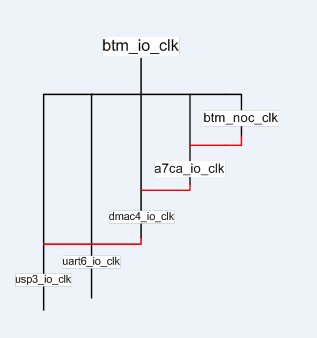
Stephen, thanks a lot. i think more about the power domain solution. we can re-look at the attached diagram(btm.png) again.
usp3 requires btm_io_clk and uart6_io_clk;uart6_io requires btm_io_clk and dmac4_io_clk;dmac4_io requires btm_io_clk and a7ca_io_clk;a7ca_io requires btm_io_clk and btm_noc_clk;
if we put these things in a power domain, it seems we can enable these clocks together or disable them together. but it seems we can't describe the dependency how.
for example, if someone wants to use usp3, it means all clocks should be enabled.
but if someone only wants to use a7ca_io, it means only btm_io_clk and btm_noc_clk should be enabled, others should be disabled. and if someone wants to use dmac4_io, then btm_io_clk , btm_noc_clk and a7ca_io_clk should be enabled, others should be disabled.
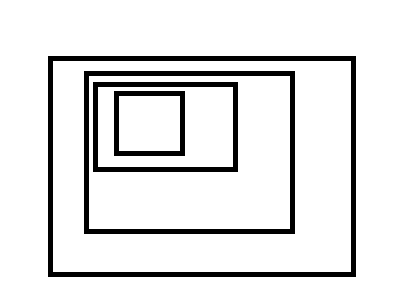
it is difficult to find any power domain things can really resolve the right dependency of the clock except that we can do such a power domain as diagram pd.png. but the problem is this is the powerdomain design in the real hardware.
it turns out the current patch really resolves all problems except that it is not a right description to clock tree. but it does build a good dependency map for the relationship of the clocks.
-barry
-------------- next part --------------
A non-text attachment was scrubbed...
Name: btm.PNG
Type: image/png
Size: 5993 bytes
Desc: not available
URL: <http://lists.infradead.org/pipermail/linux-arm-kernel/attachments/20150812/0795135e/attachment.png>
-------------- next part --------------
A non-text attachment was scrubbed...
Name: pd.png
Type: image/png
Size: 4527 bytes
Desc: not available
URL: <http://lists.infradead.org/pipermail/linux-arm-kernel/attachments/20150812/0795135e/attachment-0001.png>
PATCH 6/7 clk: sirf: fix bit field and its root clk for coresight_tpiu
In reply to Barry SongFrom: Guo Zeng <[email protected]>
bit4 thcpum_cpudiv4_clken r/wthcpum_cpudiv4_clk clock enable (default: 1)
Root clock CPU_CLK must be enabled for this clock to be enabled
bit3 coresight_tpiu_clken r/wcoresight_tpiu_clk clock enable (default: 0)
Root clock TPIU_CLK must be enabled for this clock to be enabled
---
 drivers/clk/sirf/clk-atlas7.c | 2 +-
 1 file changed, 1 insertion(+), 1 deletion(-)
drivers/clk/sirf/clk-atlas7.c +1 -1
@@ -1164,7 +1164,7 @@ static struct atlas7_unit_init_data unit_list[] __initdata = { { 122, "spram1_cpudiv2", "cpum_cpu", 0, SIRFSOC_CLKC_LEAF_CLK_EN6_SET, 0, &leaf6_gate_lock }, { 123, "spram2_cpudiv2", "cpum_cpu", 0, SIRFSOC_CLKC_LEAF_CLK_EN6_SET, 1, &leaf6_gate_lock }, { 124, "coresight_cpudiv2", "cpum_cpu", 0, SIRFSOC_CLKC_LEAF_CLK_EN6_SET, 2, &leaf6_gate_lock }, - { 125, "thcpum_cpudiv4", "cpum_cpu", 0, SIRFSOC_CLKC_LEAF_CLK_EN6_SET, 3, &leaf6_gate_lock }, + { 125 , "coresight_tpiu", "cpum_tpiu", 0, SIRFSOC_CLKC_LEAF_CLK_EN6_SET, 3, &leaf6_gate_lock }, { 126, "graphic_gpu", "gpum_gpu", 0, SIRFSOC_CLKC_LEAF_CLK_EN7_SET, 0, &leaf7_gate_lock }, { 127, "vss_sdr", "gpum_sdr", 0, SIRFSOC_CLKC_LEAF_CLK_EN7_SET, 1, &leaf7_gate_lock }, { 128, "thgpum_nocr", "gpum_nocr", 0, SIRFSOC_CLKC_LEAF_CLK_EN7_SET, 2, &leaf7_gate_lock },
Signature · 1 line
1.9.1
PATCH 7/7 clk: atlas7: fix pll missed divide NR in fraction mode
In reply to Barry SongFrom: Guo Zeng <[email protected]>
PLL VCO frequency is given by Fvco = Fref * 2 * NF / NR in integer-N mode, or by Fvco = Fref * SSN / NR in Spread Spectrum (fractional-N) mode. Thus fix the missing part of NR
---
 drivers/clk/sirf/clk-atlas7.c | 1 +
 1 file changed, 1 insertion(+)
drivers/clk/sirf/clk-atlas7.c +1 -0
@@ -358,6 +358,7 @@ static unsigned long pll_clk_recalc_rate(struct clk_hw *hw,if (regctrl0 &SIRFSOC_ABPLL_CTRL0_SSEN ) { rate = fin; rate *=1 <<24 ; +do_div (rate, nr);do_div (rate, (256 * ((ssdiv >> ssdepth) << ssdepth) + (ssmod << ssdepth))); }else {
Signature · 1 line
1.9.1